We talk about this company, Metalflex of Venas di Cadore (BL), with Giancarlo Soravia Capoto, for 30 years a prominent figure at the Metalflex factory in Venas di Cadore and a witness to the all-Cadore takeoff of Leonardo Del Vecchio. Soravia, you published on your Blog "Cadorin Books" an interesting "Cadore contribution to the establishment of Luxottica s.a.s. of Agordo." Can you explain what Cadore has to do with Agordino? «At the end of the 1950s, Cadore, unlike other areas of the province of Belluno, including Agordino, was already quite industrialized. This company, founded in 1948, was Siclov (Società Industria Cadorina Lavorazione Occhiali Venas), later called Metalflex. In the monthly "Il Cadore" of August 10, 1960, there was a direct invitation to "Industrial Gentlemen" intending to "set up, develop, decentralize their companies" in the province of Belluno, offering "suitable locations and intelligent, serious, and active workers," with a list of various incentives, both from the State with tax benefits, from the Municipalities with the granting of areas and services, and from the Bim Consortium with non-repayable funding.» But could Agordino at that time offer a context capable of attracting investments? «The decisive role was played by the then mayor of Agordo, cavalier Carlo Bortolini (Follina, 1903 - Agordo, 1985), whose merits today are not recognized as they should be. He, worried about the closure of local mines with the consequent loss of jobs and eager to give the municipality an industrial outlet, acquired land in the Valcozzena area from various private owners, equipped them with infrastructure, and offered them to the people of Cadore. So, did all this interest Metalflex? «Metalflex had a small building in the center of Venas, later enlarged several times, but still limited for its production needs, so a new factory in Agordo would have suited its needs. The first problem to face, however, was finding a person to put at the head of the new company. The person who acted as a link between the people of Cadore and Leonardo Del Vecchio was Mario Da Rin Pagnetto, (Vigo di Cadore, 1915 - Calalzo, 2006), then active as a sales representative for Metalflex in various Italian regions and still present, due to two or three old clients, in Milan, an area that since the 1950s had already been assigned to Vincenzo Zampillo (Caivano, 1928 - Milan, 1996), future father-in-law of Del Vecchio himself, as the father of Nicoletta. Da Rin used to visit Del Vecchio as a supplier of anodized aluminum temples for Metalflex from his workshop in Milan, he proposed him to the main partners describing him as a very talented and experienced die maker and the Cadore industrialists were enthusiastic, fully approving the choice for the Agordo location. But who was at the head of Metalflex at that time? «It was a simple partnership between Francesco Da Cortà (Pozzale, 1922 - 1981) who held 50% of the company shares, Elio Toscani (Venas, 1920 - 1997) and Vittorio Toscani (Venas, 1927 - 1966), Elio's brother». When and how did this "marriage" happen? «Del Vecchio had the foresight to bring himself the statute of the new company (a limited partnership), which had been drawn up not to his disadvantage by a well-known accountant from Milan, a statute that on April 27, 1961, was incorporated into the deed of incorporation of "Luxottica di Del Vecchio & C."». How many partners and what was their weight? «There were three partners, Da Cortà Francesco and Toscani Vittorio as limited partners, Del Vecchio Leonardo as general partner. The first articles stated that the Company was for the industry and trade of eyewear, printing, and related activities, with a duration set until December 31, 2000. The share capital was set at 1,500,000 lire, subscribed and paid by the partners in equal parts (500,000 lire each). Was the name "Luxottica" chosen by Del Vecchio? «I remember that Francesco Da Cortà boasted of having chosen the name himself, which over time proved to be very lucky. I must say that Da Cortà always let his regret show for having made the mistake of underestimating the qualities of his partner Del Vecchio and for having made Metalflex lose such an exceptional element». However, up to this point Metalflex seemed to be leading the dance without problems… «The crucial moment was the sudden death, in 1966, of Vittorio Toscani, following a stroke. Vittorio, who had been the driving force behind Metalflex's Agordo adventure, left behind his young wife and two daughters aged six and three. He had bet a lot on injection-molded acetate glasses and Del Vecchio was a perfect technician in this field. In 1966 Luxottica had 38 employees, in 1968 63, while Metalflex had about a hundred employees». But were the two factories competitors or complementary to each other? «Metalflex partly produced on its own and partly marketed Luxottica products, having its own network of salespeople, both in Italy (optical shops) and abroad (importers). One day Del Vecchio asked the partners to also market a "Luxottica" line, but they refused and from there tensions began to arise, until one day Del Vecchio offered the partners a certain sum to buy their shares. I remember that I myself acted as an intermediary for this request between Del Vecchio and the Metalflex ownership. The final sale took place in 1969 at the office of notary Adolfo Soccal. I remember that everyone present noticed how Del Vecchio was literally beaming with happiness at achieving a goal that was fundamental for him. I had strongly advised my bosses not to sell their shares». Why? «Luxottica was for Metalflex its only supplier of injection-molded acetate frames (moreover of unsurpassed quality) and its main supplier of various metal components. So, to my great disappointment, the sale of the majority stake in Luxottica to Del Vecchio caused, overnight, a production and commercial void in Metalflex, which was logically filled by the former. In fact, in a short time it also moved on to the production of complete metal frames and then of slab acetate frames. Metalflex thus lost its best customers, who turned directly to the Agordo factory, led by a young, reliable, technically expert, dynamic "patron" who inspired total trust». But today can we say that Metalflex's choice was truly self-defeating? «In fact, it all happened in a paradoxical context: those who had the money sold and those who (at the time) didn't have it bought. Del Vecchio himself once confided to me his amazement at the decision of the people of Cadore to sell, just when the factory, after years of shared sacrifices, could begin to bear fruit. The 1969 deed of sale bears the signature of Francesco Da Cortà for his shares and of Maria Gei, widow Toscani, duly authorized by the Guardianship Judge, for the shares inherited by the minor daughters (she was only partially usufructuary). In truth, the decision of the widow Toscani to follow Da Cortà was opposed, because on the one hand she greatly admired Del Vecchio, but on the other hand she did not feel like opposing Da Cortà who had taken a strongly critical position towards Del Vecchio himself. To complete the picture, the choices were also influenced by Elio, Maria's brother-in-law, a partner in Metalflex but not (at least legally) in Luxottica, who sided with Da Cortà. In my humble opinion, it was also the Guardianship Judge who made a mistake in granting authorization for the sale, due to lack of motivation, whereas it would have been more correct to let the minors themselves decide the fate of their assets, on the date of their respective coming of age». Metalflex
HISTORY OF THE BRANDS: METALFLEX
HISTORY OF THE BRANDS: METALFLEX
2024-08-13 10:39
2024-08-13 10:39
Array() no author 93007
HISTORY OF THE BRANDS/HISTORY OF THE BRANDS, metalflex, metalflex-vintage, metalflex-vintage-eyewear, metalflex-venas-di-cadore-1948, storia-metalflex-occhiali, del-vecchio-metalflex,
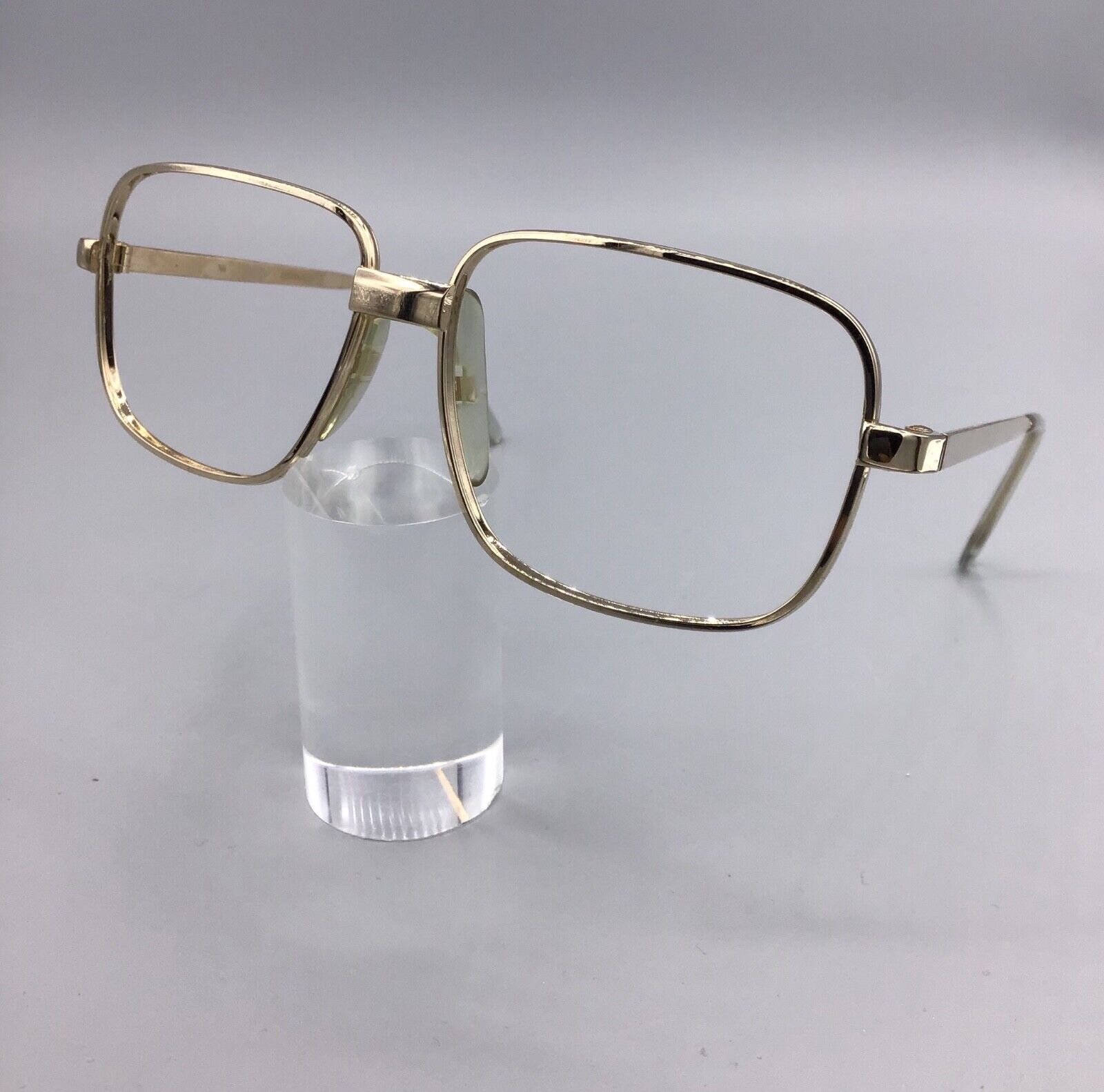
History of Metalflex in Venas di Cadore, the Cadore adventures of Del Vecchio.
© Formenti Sas di Formenti Gianpaolo & C.
30171 Via Piave 83 Venice Mestre(VE)
VAT IT02354560274